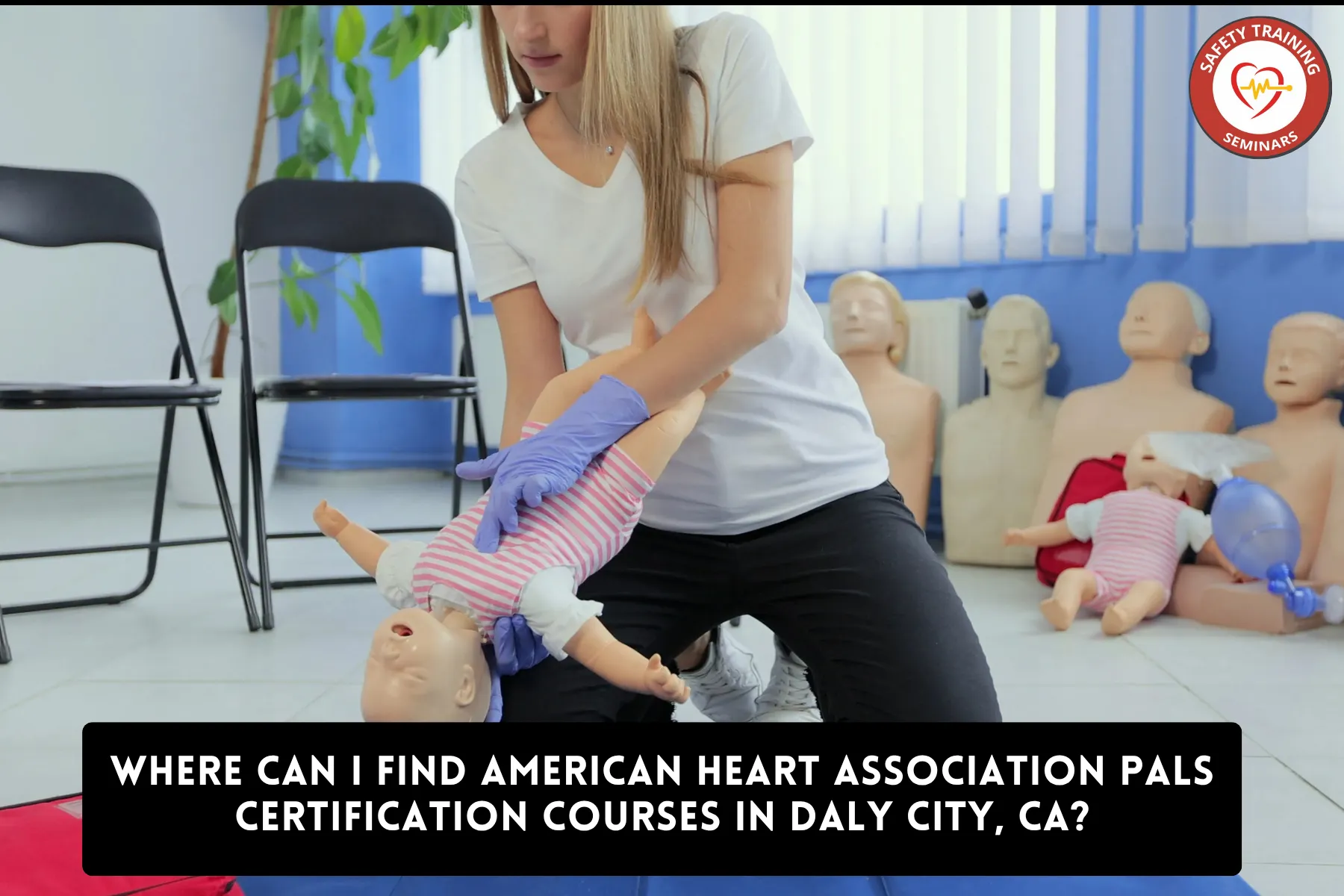
Healthcare professionals searching for American Heart Association (AHA) Pediatric Advanced Life Support (PALS) certification courses in Daly City can explore training through Safety Training Seminars. The local provider lists PALS training with an online learning component and an in-person skills session, giving eligible participants a way to complete the coursework and practical assessment in separate stages.
The Daly City training center serves as a local option for nurses, physicians, paramedics, respiratory therapists, and other clinicians who need pediatric emergency response training. To compare course formats and review registration details.
Finding PALS Training in Daly City
Daly City is part of San Mateo County, where healthcare professionals may work across hospitals, outpatient clinics, emergency services, and other clinical environments. For clinicians whose responsibilities include caring for critically ill infants and children, PALS training focuses on recognizing deterioration, prioritizing treatment, and coordinating resuscitation efforts.
Safety Training Seminars lists its Daly City training location at 333 Gellert Blvd, Suite 215, Daly City, CA 94015. Before booking, review the current course listing to confirm the available dates, format, fees, and practical requirements.
The local PALS registration page is the appropriate starting point for checking which course option matches your training needs.
What PALS Training Teaches Healthcare Professionals
Pediatric Advanced Life Support is designed for healthcare providers who respond to emergencies involving infants and children. The AHA curriculum emphasizes systematic assessment, early intervention, resuscitation skills, and coordinated clinical decision-making.
Key learning areas include:
- Recognizing respiratory emergencies: Identifying respiratory distress and respiratory failure so that appropriate interventions can begin promptly.
- Assessing pediatric patients: Using a structured approach to identify signs of deterioration and determine treatment priorities.
- Managing shock: Distinguishing compensated shock from hypotensive shock and understanding early management principles.
- Responding to cardiac emergencies: Assessing stable and unstable arrhythmias and managing pediatric cardiac arrest.
- Coordinating resuscitation teams: Communicating clearly, assigning responsibilities, and applying high-quality CPR during emergencies.
- Providing post-arrest care: Understanding the clinical priorities that follow successful resuscitation.
These skills are intended to help clinicians apply a consistent approach to high-risk pediatric situations. The exact learning activities and assessment requirements depend on the selected course format.
Which Healthcare Professionals Benefit From PALS Classes?
PALS training is most relevant to clinicians who regularly assess or treat infants and children during serious medical emergencies. In Daly City, the course may be worth considering for healthcare workers whose duties involve pediatric emergency response or critical care.
Common participants include:
- Nurses: Pediatric nurses, emergency department nurses, and intensive care nurses whose employers require advanced pediatric life support training.
- Physicians and medical residents: Clinicians involved in pediatric emergency assessment, stabilization, and resuscitation.
- Paramedics and emergency responders: Professionals whose responsibilities include responding to pediatric medical emergencies.
- Respiratory therapists: Specialists who assist with respiratory assessment and airway management in critically ill patients.
- Other qualified healthcare professionals: Clinical staff who participate in pediatric resuscitation teams.
The AHA identifies emergency medicine, intensive care, critical care, and emergency response as relevant areas for PALS training. However, not every position requires the same course. Check with your employer or credentialing department before registering.
Choosing Between Classroom, Blended, and Self-Guided PALS
The AHA provides several ways to complete PALS training. Understanding the differences can help Daly City healthcare professionals select a course that suits their learning preferences and schedule.
| Course format | How it works | Best suited for |
| Classroom | Instructor-led learning with practical activities | Learners who prefer face-to-face instruction throughout the course |
| Blended learning | Online coursework followed by an instructor-led, hands-on skills session | Professionals who want flexibility for the knowledge-based portion |
| Self-Guided Learning™ | Online learning followed by skills practice and verification at a CPR Verification Station™ learning center | Eligible learners who prefer a self-paced approach |
Availability of specific formats depends on the training provider and course listing. Confirm which options are offered locally before making a booking.
For blended learning, completing the online component is only one part of the process. Participants must also meet the required practical skills and assessment standards to receive the corresponding course completion card.
PALS Training and Daly City’s Healthcare Environment
Daly City has a local healthcare community that includes Seton Medical Center, a hospital providing emergency services. The presence of healthcare facilities in the city makes pediatric emergency education a relevant professional consideration for clinicians whose responsibilities include treating children.
Healthcare professionals working in emergency departments, intensive care settings, and other clinical environments may need to maintain current life support training as part of their employment requirements. PALS provides a structured approach to pediatric assessment, recognizing instability, and coordinating interventions during critical events.
For professionals living in or commuting from nearby communities such as Colma, South San Francisco, and Pacifica, the Daly City course listing offers a starting point for checking local training arrangements. Travel convenience should be considered alongside course eligibility, format, and the requirements established by the participant’s employer.
Importantly, the existence of a local hospital does not mean that every employee must complete PALS. Requirements depend on individual duties and organizational policies.
How to Prepare Before Registering for PALS
A little preparation can make the training process more manageable, especially for professionals balancing clinical work, study, and renewal deadlines.
Before enrolling, consider these steps:
- Confirm the course you need. Determine whether you require an initial PALS course, a renewal, or a specific skills session.
- Review the prerequisites. Check the current course requirements and make sure your existing training meets them.
- Arrange time for coursework. If you select a blended option, allow enough time to complete the online learning before your practical session.
- Review the required materials. Confirm which manual, digital resources, or other learning materials apply to your course.
- Verify your appointment. Check the registration confirmation for the session date, arrival instructions, and any required preparation.
- Check your completion-card deadline. If you are renewing, compare your current card’s expiration date with your employer’s renewal policy.
These steps help you choose the appropriate training pathway and avoid scheduling a course that does not meet your professional needs.
Frequently Asked Questions About PALS Certification in Daly City
How long does a PALS course take?
The duration depends on the course format and learning requirements. The AHA lists PALS course options ranging from approximately 5.5 to 17.5 hours. Blended and self-guided formats may divide learning between online coursework and practical skills activities. Confirm the timing for your selected course before registering.
How long is an AHA PALS completion card valid?
An AHA PALS Provider Course Completion eCard is valid for two years. Review your card’s expiration date and check your employer’s policy to determine when you should complete renewal training.
Can I complete PALS entirely online?
The available formats differ. Blended PALS requires an in-person skills session after the online portion, while the AHA’s Self-Guided Learning™ pathway involves skills practice and verification at a CPR Verification Station™ learning center. Online coursework alone does not fulfill every requirement for these pathways.
Is PALS the same as BLS?
No. Basic Life Support (BLS) focuses on foundational resuscitation skills, while PALS addresses the assessment and management of critically ill infants and children. Healthcare professionals should confirm whether their position requires BLS, PALS, or both.
Who should take PALS training?
PALS is intended for healthcare professionals who respond to pediatric emergencies, including clinicians in emergency medicine, intensive care, critical care, and emergency response. The appropriate course depends on your role, experience, and workplace requirements.
How do I find available PALS classes in Daly City?
Visit the Daly City PALS course registration page to review the local course information. Confirm the current schedule, pricing, format, and registration requirements before booking.
Register for a PALS Course in Daly City
For healthcare professionals seeking PALS training in Daly City, Safety Training Seminars provides a local option to explore. Choosing the right course begins with understanding your professional requirements, selecting the appropriate training format, and allowing sufficient time for both learning and practical assessment.
Review the available options through the Safety Training Seminars Daly City PALS certification page. Confirm the details before registering so that your selected course aligns with your training needs and employer’s expectations.